AI overview
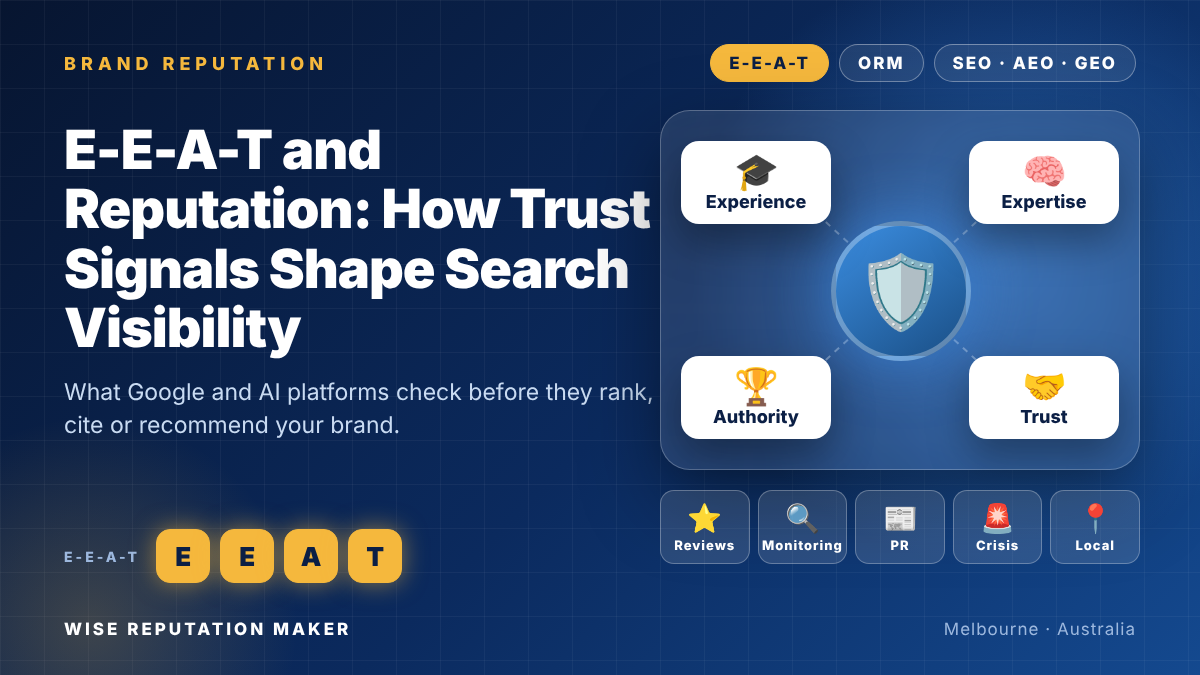
E-E-A-T stands for Experience, Expertise, Authoritativeness, and Trustworthiness, and Google’s quality raters use it to judge whether a source can be relied on. Brand reputation is the public evidence behind each of the four. Customer reviews, media coverage, author credentials, consistent business details, and overall sentiment all work as trust signals. Google Search and AI assistants such as ChatGPT, Gemini, and Perplexity draw on them when they decide which brands to rank, cite, or recommend.
Introduction: Visibility is Now Earned Through Trust.
A few years ago, ranking well mostly came down to relevant keywords and quality backlinks. Those still matter, but they no longer carry a brand on their own. Search engines and AI answer tools now ask a second question, which is whether the brand can be trusted.
To find out, they look well beyond your website. They read your reviews, scan news coverage, compare your business listings and weigh the tone of public conversation about you, which means they are assessing your reputation. That is why specialists offering online reputation management services in Melbourne increasingly treat trust signals as a foundation of search visibility and not as a separate public relations exercise.
This article explains how E-E-A-T and brand reputation work together, which signals matter most and how a business can build them in a structured, ethical way.
Understanding E-E-A-T
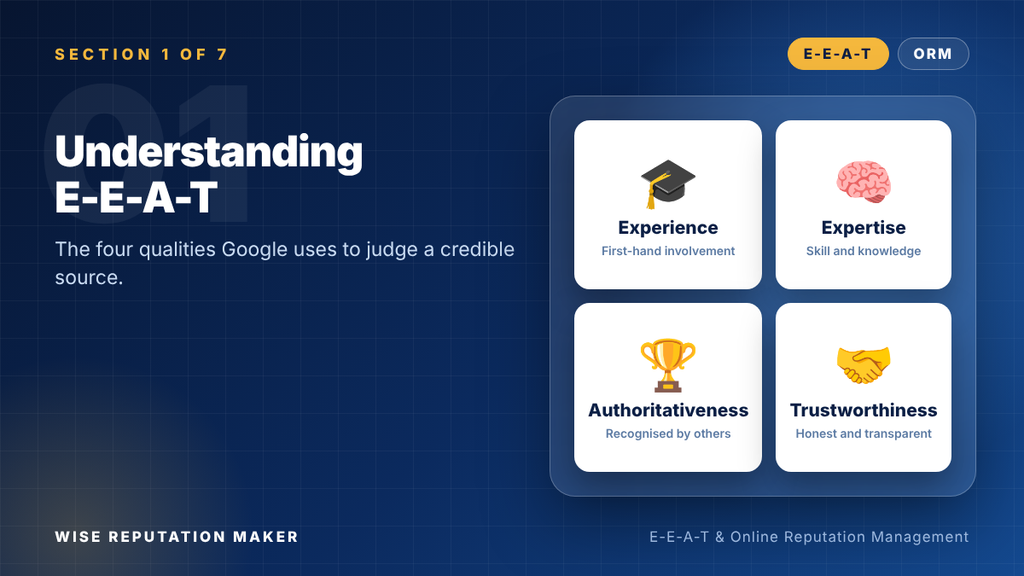
E-E-A-T comes from Google’s Search Quality Rater Guidelines. It is not a single ranking factor, and there is no score you can look up. It is a framework that describes what a credible source looks like.
Experience is firsthand involvement with the subject, and case studies, original photos, and real project stories are the evidence for it. Expertise is skill and knowledge in the field, shown through qualifications and content that is detailed and accurate. Authoritativeness means other people recognize you as a source worth turning to, which industry mentions, citations and awards demonstrate. Trustworthiness covers honesty, transparency, and safety, and it rests on genuine reviews, clear policies, and a secure website.
Google has stated that trust is the most important of the four, and the other three exist to support it. A business can publish excellent content and still lose credibility if a trail of unanswered complaints and inconsistent information sits beside it.
Why Reputation Is the Trust Layer
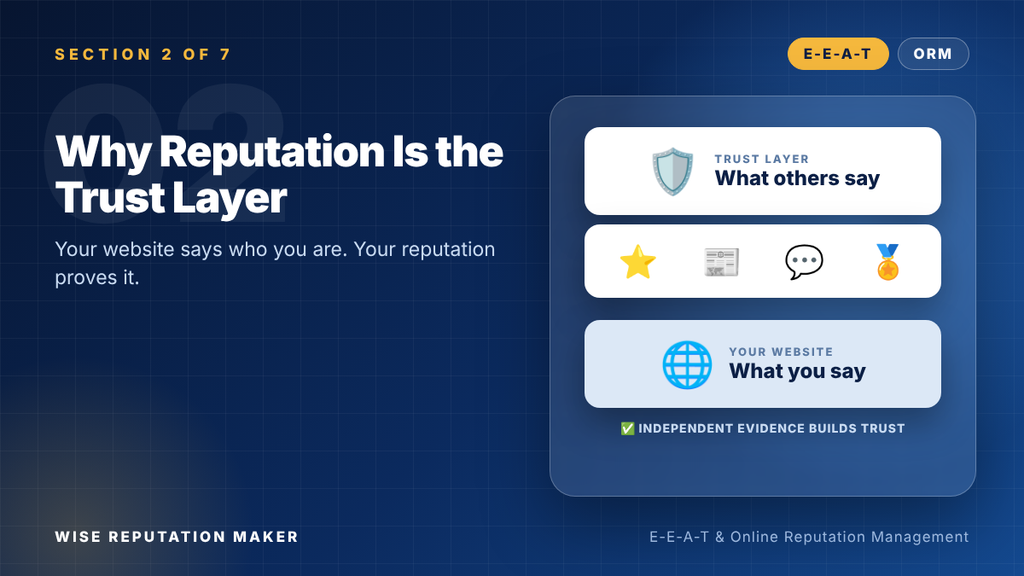
Your website describes what you say about yourself, while your reputation reveals what everyone else says. Quality raters are instructed to look for independent information about a business, including reviews, news articles, forum discussions, and third-party ratings.
The principle applies to every industry, though it carries extra weight in health, finance, legal services, and safety, where poor advice can cause real harm. A consistent, positive, and verifiable reputation shows algorithms that real customers have had genuinely good experiences.
How Search Engines and AI Platforms Read Trust
Three related approaches help explain why reputation now influences visibility so heavily.
SEO, or search engine optimization, helps your pages appear in traditional search results, and trust signals affect how often people click and whether they convert. AEO, or Answer Engine Optimization, helps your content become the direct answer in featured snippets, voice search, and AI summaries. Clear, factual, and well structured information performs best, but the brand behind it needs credibility to be selected. GEO, or Generative Engine Optimization, helps your brand appear accurately inside AI generated responses. Language models learn from patterns across many sources, so a brand that is mentioned consistently and positively on reputable sites is more likely to be described correctly.
In each case the system looks for corroboration. When your website, review profiles, directory listings and media coverage all tell the same story, confidence grows. When they contradict one another, or when negative content dominates, confidence falls.
The Seven Trust Signals That Matter Most
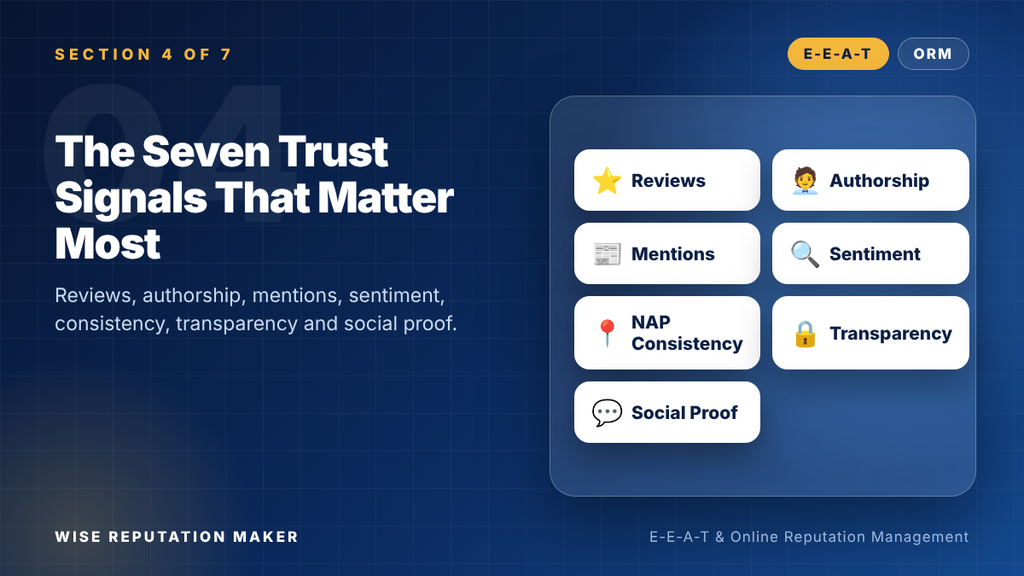
Seven signals carry the most weight, and they work best together.
Customer reviews and ratings come first. Volume, recency, average rating, and your responses all contribute, and a steady stream of genuine reviews on Google Business Profile and industry platforms signals an active, reliable business. Thoughtful replies to criticism show accountability.
Authorship and credentials come next. Content with named authors, honest biographies, and verifiable qualifications supports experience and expertise, while anonymous content is far harder to trust.
Brand mentions and citations build authority. Coverage in news outlets, trade publications, and respected directories counts for a lot. Links are valuable, but unlinked mentions also help AI systems recognize your brand as a distinct entity.
Search result sentiment is the fourth signal. The first page of results for your brand name is effectively your public profile, and when outdated, inaccurate or hostile pages dominate it, both visitors and algorithms notice.
Entity and NAP consistency matters because your business name, address, and phone number should match everywhere they appear. Consistency lets search engines connect your listings to a single verified entity.
Website transparency is the sixth signal. Clear contact details, privacy and refund policies, secure browsing, and an informative About page all reinforce trustworthiness. The seventh is social proof and engagement, since professional, active social profiles and genuine community interaction add depth and authenticity to your brand’s online footprint.
How Wise Reputation Maker Builds and Protects Trust
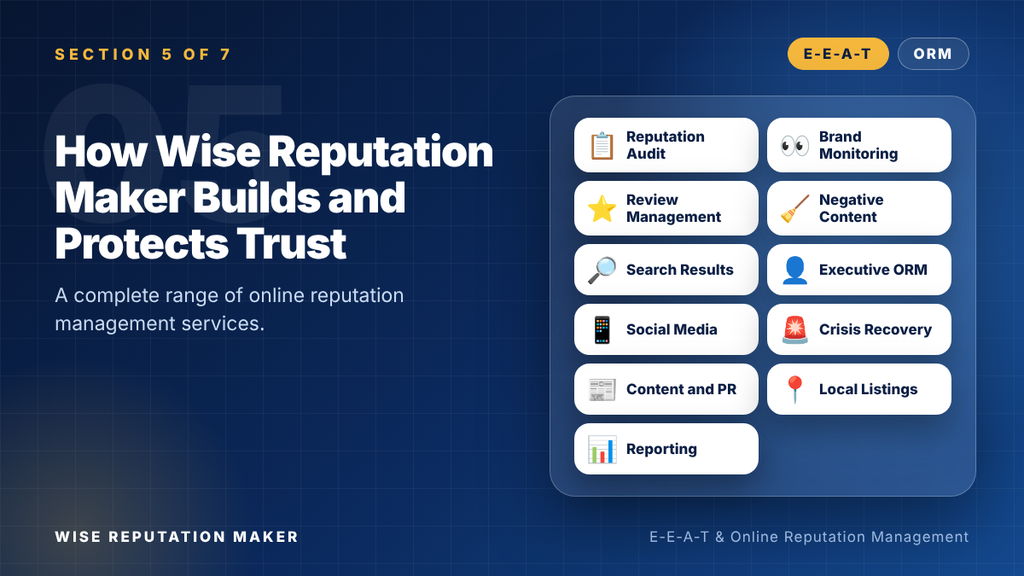
Strengthening these signals takes planning, monitoring, and consistent action. Wise Reputation Maker provides a complete range of services aligned with the trust factors above, and businesses seeking structured online reputation management services in Melbourne can work with the team across these areas.
It starts with an online reputation audit, a thorough review of what appears when people search for your brand, covering ratings, search results, social profiles, and sentiment, so that strengths and risks are clearly identified. Brand monitoring then tracks mentions, reviews, and conversations across the web, which allows issues to be addressed before they escalate. Review management covers ethical processes for gathering genuine customer feedback and responding professionally on Google and other platforms.
Negative content management is the lawful handling of damaging, inaccurate, or outdated content through platform policy requests and, where appropriate, the creation of accurate, authoritative content. Search result improvement builds credible pages and profiles so that your brand name returns a balanced and accurate picture. Personal and executive reputation management protects the public image of founders, medical practitioners, lawyers, and other professionals whose names are closely tied to their business.
Social media reputation management keeps brand profiles consistent, active, and responsive. Crisis and reputation recovery support gives you a clear response plan for when a complaint, news story, or viral post puts your brand under pressure. Content and PR support provide articles, press releases, and thought leadership content that demonstrate real expertise and earn credible mentions. Local listing and profile optimization keep business information accurate and consistent across directories and maps, and reporting and strategy deliver regular insights on sentiment, ratings, and visibility so that progress can be measured and refined.
Taken together, these services create evidence that search engines and AI tools can verify. When evaluating online reputation management services in Melbourne, look for a provider that works across all of these areas and does not rely on a single tactic.
Eight Practical Steps You Can Take Today
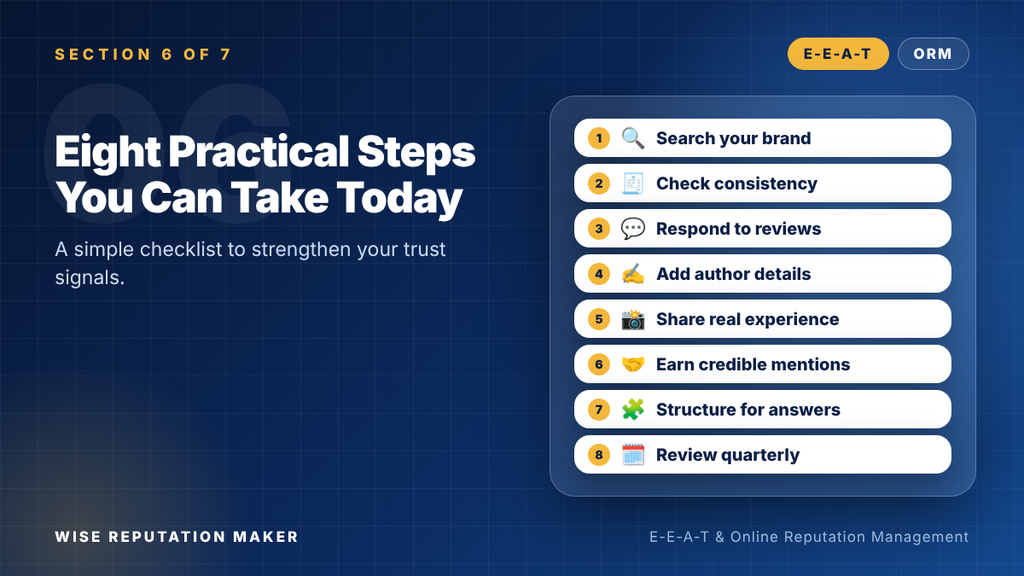
1. Search your own brand. Use a private browser window and record what appears on page one, including reviews, news, forums, and social profiles.
2. Check consistency. Compare your business name, address, phone number, and descriptions across every profile.
3. Respond to reviews. Reply to positive and negative feedback calmly, specifically, and promptly.
4. Add author details. Give every article a named author with a short, honest biography.
5. Share real experience. Publish case studies, process explanations, and lessons from actual work.
6. Earn credible mentions. Contribute to industry publications, local business groups, and community initiatives.
7. Structure content for answers. Use clear headings, concise definitions, and FAQs so that AEO and GEO systems can extract accurate information.
8. Review quarterly. Reputation changes constantly, so schedule regular check-ins.
Why Local Context Matters
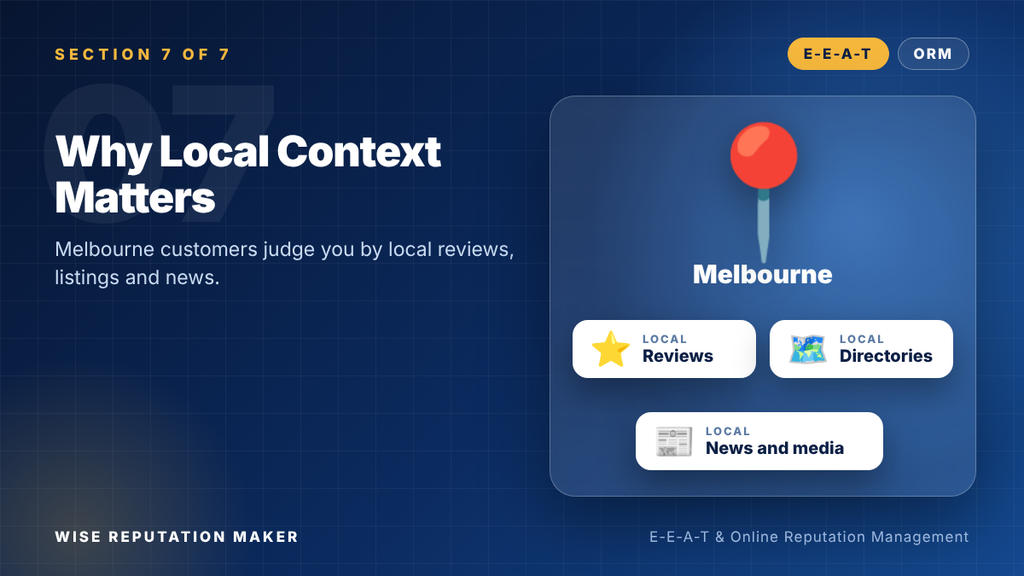
Reputation is often local. Many customers search with a location in mind and judge a business by nearby reviews, regional directories, and local news. Melbourne is a competitive, review-conscious market, and a gap in local trust signals can cost enquiries even when a website is strong. Working with specialists in online reputation management services in Melbourne helps align your local presence with the standards that search engines and customers expect.
Measuring the Impact
Track indicators that reflect trust and not just traffic. Watch the average star rating and review volume over time, along with the share of positive, neutral, and negative sentiment. Branded search volume and click through rate matter too, as do appearances in AI generated answers and featured snippets. Finally, count the number and quality of brand mentions, and keep an eye on enquiry quality and conversion rate. Together, these measures show whether your trust signals are improving and whether visibility is following.
Key Takeaways
E-E-A-T is a framework for credibility, and reputation is the public proof behind it. Reviews, mentions, authorship, sentiment and consistency carry the most weight, and AEO and GEO reward brands that are corroborated across many trustworthy sources. Reputation work is ongoing, so monitoring and improvement should be continuous. A structured approach that covers audits, monitoring, review management, content and crisis readiness delivers the strongest results.
AI Summary
Search visibility now depends on trust as much as relevance. E-E-A-T describes the qualities of a credible source, and a brand’s online reputation provides the evidence. Reviews, authorship, media mentions, search sentiment and consistent business details shape how Google and AI tools assess a brand. Active reputation management, including Online Reputation Management Services in Melbourne, turns these signals into a measurable advantage across traditional search, answer engines and generative AI.
Frequently Asked Questions
Is E-E-A-T A Direct Google Ranking Factor?
No. It is a framework used by quality raters to evaluate search results. Google’s systems use many signals that align with it, so improving genuine trust signals supports better visibility.
How Does Brand Reputation Affect SEO?
Reputation influences what searchers see, how they behave and what third party sources say about you. Strong reviews and positive coverage build trust, while unresolved negative content can reduce clicks and conversions.
Do AI Tools Such as ChatGPT and Gemini Consider Reputation?
Generative tools draw on patterns across the web. Brands mentioned consistently and favourably on credible sources are more likely to be described accurately and recommended.
Can negative reviews be removed?
Only content that breaches platform policies, such as fake, abusive or irrelevant reviews, can be reported for removal. Genuine criticism is best handled with a professional response and service improvement.
How Long does reputation improvement take?
Timelines depend on your starting point and the platforms involved. Review growth and profile updates can show movement within weeks, while shifting search results and building authority usually take several months.
Who Needs Reputation Management?
Any business, professional or public figure with an online presence. It is especially valuable for service providers, healthcare and legal practices, hospitality, ecommerce and growing brands.
Conclusion
Search engines now weigh trust alongside relevance. E-E-A-T supplies the framework, and your reputation supplies the proof. Brands that invest in accurate listings, genuine reviews, expert content and credible mentions become easier for both people and AI systems to trust and recommend. Pairing these efforts with Online Reputation Management Services in Melbourne gives a business a clear, practical way to protect its image and strengthen its visibility.
